
Viscose: What is it? What’s good or bad about wearing it? A knitwear designer/maker's view...
The good, the bad and the ugly; facts about viscose knitwear from British knitwear designer/maker Susan Holton
Viscose - some key facts
Originally known as ‘artificial silk’.
A luxury fibre.
Drapes well and looks good. (Except for item 7 below).
Soft, smooth and comfortable to wear.
Easy to look after - easy to wash and dry.
Dyes well.
Prone to shrinking and creasing.
Cooler to wear than wool.
A natural fibre. Well, sort of - see below.
A man-made fibre. Yes - but see below.
Not a synthetic fibre.

Frequently asked questions about… viscose
I love to wear and knit with viscose. In my opinion viscose makes garments which are comfortable and lovely to wear with a beautiful drape, and which are soft and smooth to the touch. But it also has a bad side, so here is everything you need to know! www.susanholtonknitwear.com
What is viscose?
Viscose is a much misunderstood fibre
I love to wear and knit with viscose. It’s a beautiful fibre which is soft and smooth to the touch, and which knits up into luxury knitwear which is comfortable and lovely to wear with a beautiful drape.
See below for examples of my viscose and viscose blend knitwear
For me, the drape, the colours, the silky appearance and the comfort far outweigh any disadvantages.



Garment details
Above top row from left to right: (L) Hand dyed 80% silk 20% viscose soft drapey cardigan-jacket in slate; (C) Hand dyed 80% silk 20% viscose soft drapey cardigan-jacket in olive green; (R) Swing hem tunic-waistcoat and tunic-dress 50% viscose 25% cotton 12.5% linen 12.5% acrylic.
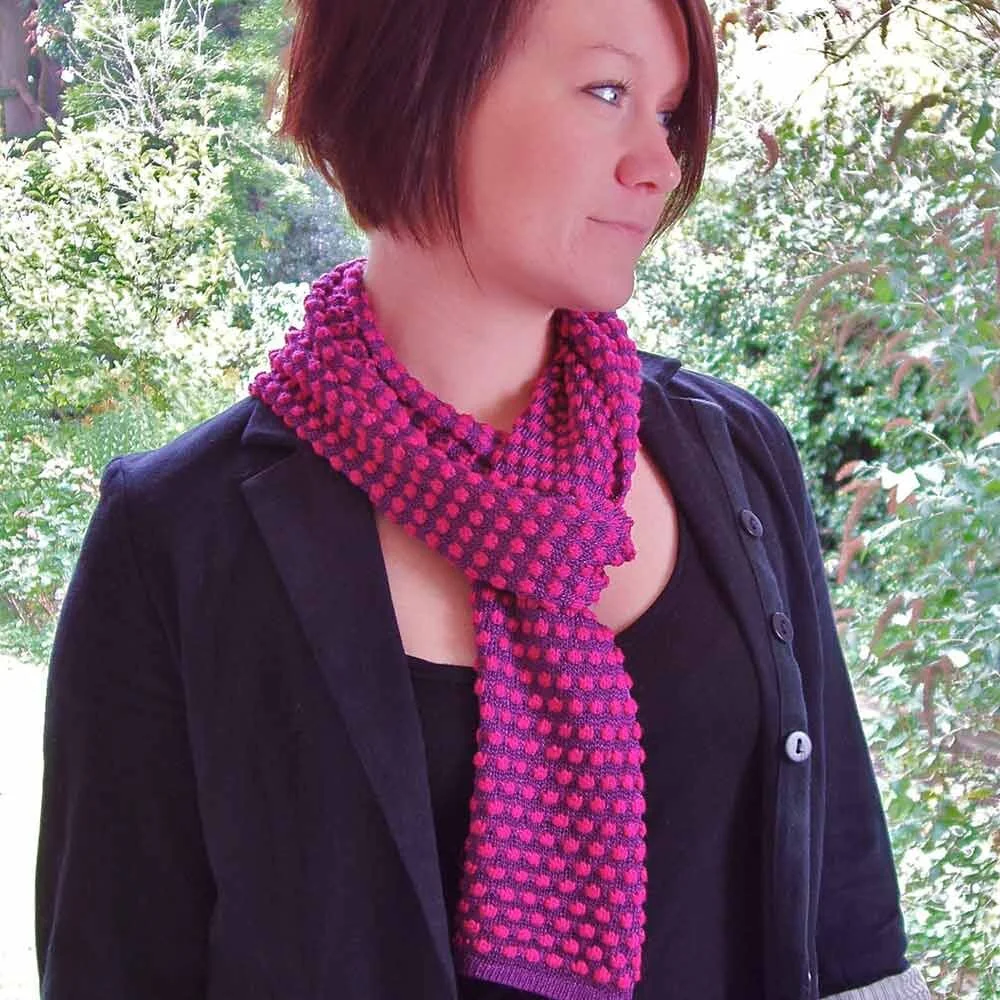
Above bottom row from left to right: (L) Hand dyed 50% silk 50% viscose bobble scarf in burgundy/claret; (C) Hand dyed 50% silk 50% viscose bobble scarf in purple/magenta; (R) Hand dyed 50% silk 50% viscose bobble scarf in dusty blue/yellow.
A little history:
‘Artificial silk’
We think that viscose is the oldest manufactured fibre. It probably dates from around 1883, and was created as a low cost alternative to silk. It was originally known as ‘artificial silk’.
Wikipedia says:
‘Viscose is a type of rayon fibre that is made from natural sources such as wood and agricultural products that are regenerated as cellulose fibre. The molecular structure of natural cellulose is preserved in the process.’


Is viscose a natural fibre?
Well. Yes and no… I usually describe it as natural but man-made. That is, it is made from natural ingredients but it is regenerated - not used in its natural form.
Natural but man-made
Viscose is regenerated from natural cellulose (= a plant product). Originally it was made from regenerated wood pulp. So it’s not truly natural – as for example cotton, linen and silk are. Nor is it truly synthetic – as for example polyester, acrylic or polyester are.
Types of viscose
Viscose is often used as a generic term to cover:
viscose or viscose rayon
bamboo
lyocell*
tencel*
modal
NB *these are brand names
There are subtle differences both in the raw materials used for the different types of viscose, and in the manufacturing processes, which require too much explanation to go into here. These differences mean that the finished products are subtly different from each other.
‘Viscose/viscose rayon’
The type of viscose I use is viscose or viscose rayon. One of my favourite viscose knits is below:

Swing hem tunic-dress or tunic-waistcoat
50% viscose, 25% cotton, 12.5% linen and 12.5% acrylic. Blending and mixing several yarns together gives the benefits of different fibres while minimising their individual disadvantages. There are different colour options, which you can see here.
“‘Really unusual, but hangs beautifully, travels well and just gives some pzazz over a normal jumper or shirt and jeans. May go back for another and be adventurous on the colour!’”
I am frequently asked about the other types of viscose - especially bamboo, lyocell and tencel. So here’s a little more information on these.
Bamboo fibre/fabric
I get asked about bamboo fibre and fabrics quite a lot. Bamboo fabric is a type of viscose and so has many of the same excellent characteristics. Bamboo viscose has some major advantages over regular viscose, and over cotton, for example, in that bamboo grows fast - much faster than trees - and it doesn’t need pesticides, which are needed in large quantities for most cotton production.
But, while viscose has its good side, it also has a bad side…
The process used to create all types of viscose uses a lot of chemicals which pollute to a greater or lesser extent.
Lyocell and Tencel
Viscose fibre has so many characteristics which make it good for clothing and knitwear, so a lot of work is being done into cleaner manufacturing processes which are kinder to the environment. Lyocell and Tencel are some of the newer viscose fabrics which have similar characteristics to ‘classic’ viscose, while having the advantage of being more environmentally friendly. Sadly, at the moment I am unable to buy these in the form of fibre suitable for knitwear. But I’m sure this will come…
Advantages of viscose
1. Good at absorbing moisture
Good moisture absorption means it’s comfortable to wear and easy to dye.
Viscose shares many of its good-wearing characteristics with other plant or cellulose fibres such as cotton and linen. The main plant/cellulose fibres are viscose, cotton and linen - and they are all good moisture absorbers.
2. Silk-like feel and beautiful drape
Garments knitted with viscose drape beautifully and look and feel lovely to wear, so I use it a lot in my knitwear. It blends well with other fibres, and when I knit with it, I often blend it with cotton, linen and silk. By blending and mixing different fibres with viscose into my knitwear and accessories I gain the benefits of viscose AND the advantages of the other fibres in the blend.
For example, cotton and linen both increase in strength when wet. Viscose, however, is weaker when it’s wet, so when I combine viscose with cotton or linen it gains from their extra strength.
3. Comfortable and breathable
Viscose absorbs moisture from your skin very well. This absorption ability means that viscose garments are ‘breathable’ – unlike synthetics such as polyester - so wearing them means you feel more comfortable, because you feel cool and dry not clammy and warm.
4. Dyes beautifully
This ability to absorb moisture also means that my viscose knitwear absorbs dye colour well and retains it well. So I can dye my viscose garments into a wide range of beautiful bold and subtle colours which will withstand laundering to last the life of the garment.


Hand dyed silk and viscose bobble scarves
50% silk and 50% viscose. Hand dyed to achieve bold or subtle colours. The viscose in the background gives drape and sheen to the scarf. You can see more colour options here.
“‘I love everything about the scarf, the colours, the silky feel to it, and the quality.’”
Disadvantages of viscose
Although I love to wear and knit with viscose, it does have disadvantages as well as benefits. Its main problem is that it’s prone to shrinking and creasing. In this it is very similar to the main ‘natural’ plant fibres, cotton and linen.
1. Shrinking
The tendency of viscose to shrink is easily dealt with. I wash and dry all of my knitwear as part of my standard finishing process. This means that before any item leaves my studio it has done all of the shrinking it’s going to do in its life. Unless you do something very silly like wash it in your washing machine on hot – please don’t do that with any of my knitwear!
I pre-shrink all my knitwear before it leaves my studio
So providing you follow my care instructions, none of my knitwear – even viscose knitwear – will shrink or stretch.
2. Creasing
Again, this is where blending yarns together can be advantageous. I sometimes knit as many as three different yarns together in my knitwear, it’s time consuming but helps me to achieve the fabric ‘handle’ (the ‘feel’ if you like), texture, and drape I’m looking for. It also sometimes means that there may be small amounts of synthetic fibres such as nylon or acrylic in a garment.
But - when combined, the creases tend to drop out
Although garments knitted in viscose, cotton and linen have a tendency to crease, when combined together in a viscose blend the creases tend to be shorter-lasting, and to drop out of the knitwear (for example after travel) if you hang it for a short time, or when you’ve been wearing it for a little while.
3. Environmental impact
As discussed above, sadly the production of all types of viscose is detrimental to the environment. But this is changing and improving all the time.
Viscose in my knitwear
If you would like to know in detail which of my garments and accessories have viscose in them, please don’t hesitate to get in touch.
Whether or not it has viscose in it, all of my knitwear can be washed - there’s no need to dry clean it. You can find full details on how to look after it here. I pre-wash all of my knitwear before sending it out to customers so providing you follow my user-friendly care instructions the garment will have done all the shrinking it’s going to do.
Many of my customers come back time and again to add to their collection of my knitwear, and I’m lucky to have some glowing reviews which you can see above and on my reviews page.
I hope you like my knitwear too!
As ever, please don’t hesitate to get in touch with me if you have any questions. I’d love to help…
FIND OUT ABOUT EVENTS, SALES AND OTHER NEWS BY JOINING MY VIP LIST
All of the public events at which I would have been exhibiting in the next few months have been postponed or cancelled because of the corona virus epidemic. While this is disappointing both for visitors and exhibitors, it is definitely the right action to take for everyone’s safety. I am using social media to keep everyone informed of any changes in the first instance, and following this with emails with more detailed information. The best way to stay in touch is to follow me on social media, and to join my VIP list. I won’t make a nuisance of myself, I’ll only email you when I actually have something new to say!
You may also find these blog posts interesting:


Susan Holton working at her knitting machine
Susan Holton creates beautiful wearable knitwear - for women of all ages shapes and sizes who want to look and feel fabulous.
Read more about Susan Holton Knitwear…
You may also like…

If you’d like to see more blog posts… you can browse all blog posts here, or click on a category from the list below:
On the blog - Why does wool itch? How can I make it more wearable? Woollen knitwear is lovely to wear, so it is frustrating if you can’t wear your favourite wool jumper or sweater because it makes you itch. So here are ways to make your British wool knitwear less itchy. And also some suggestions for lovely but less itchy options. #wool #knitwear #womens #womensknitwear www.susanholtonknitwear.com