
Slow fashion: the case for slow fashion and dressing for the planet
How can ‘slow fashion’ change the world – one garment at a time?
“‘Buy less, choose well, make it last.’”
Slow fashion = sustainable and ethical fashion
There’s a lot of wastage in the fashion business – and ‘fast fashion’ is a major culprit. I advocate for ‘slow fashion’, and knitwear is probably the perfect example of this.
I believe we should choose the clothing we buy carefully, select items which will last, ideally keep them for years, and know how to look after each piece to keep it in good condition.

Buy less, choose well, make it last...
I hate waste!
Of course I want my customers to buy new items from me… but - I also want every purchase to last as long as possible. I want the piece you buy from me to be the piece you reach for to wear time and again over many, many years.
And while clothing has a significant impact on the environment during manufacture, did you know that it also has a big environmental impact after you’ve bought it?


Slow fashion vs fast fashion ‘facts’ and opinions
This is a HUGE subject, and this blog post can only scratch the surface. I will give you some ‘slow fashion/sustainable fashion facts’ – and some opinions. And I’ll share some of the ways our buying and laundry choices can result in a less damaging environmental footprint.
So - let’s start with some numbers
BEFORE YOU BUY
1 Water usage in manufacture
It takes about 2,700 litres of water to produce one cotton t shirt. Probably about the quantity that one person (in the first world) drinks in 2.5 years. More information on the lifecycle of a cotton t shirt in my blog post here.
2 Carbon emissions
The global fashion industry is probably responsible for 10% of the world’s carbon emissions. I’m told that’s more than international flights and shipping combined.
3 Chemical pollution
Textile manufacture is a very heavy user of chemicals. Probably more than 8,000 different chemicals are used in textile production. And many of these end up polluting our seas and rivers, and harming our ecosystems.
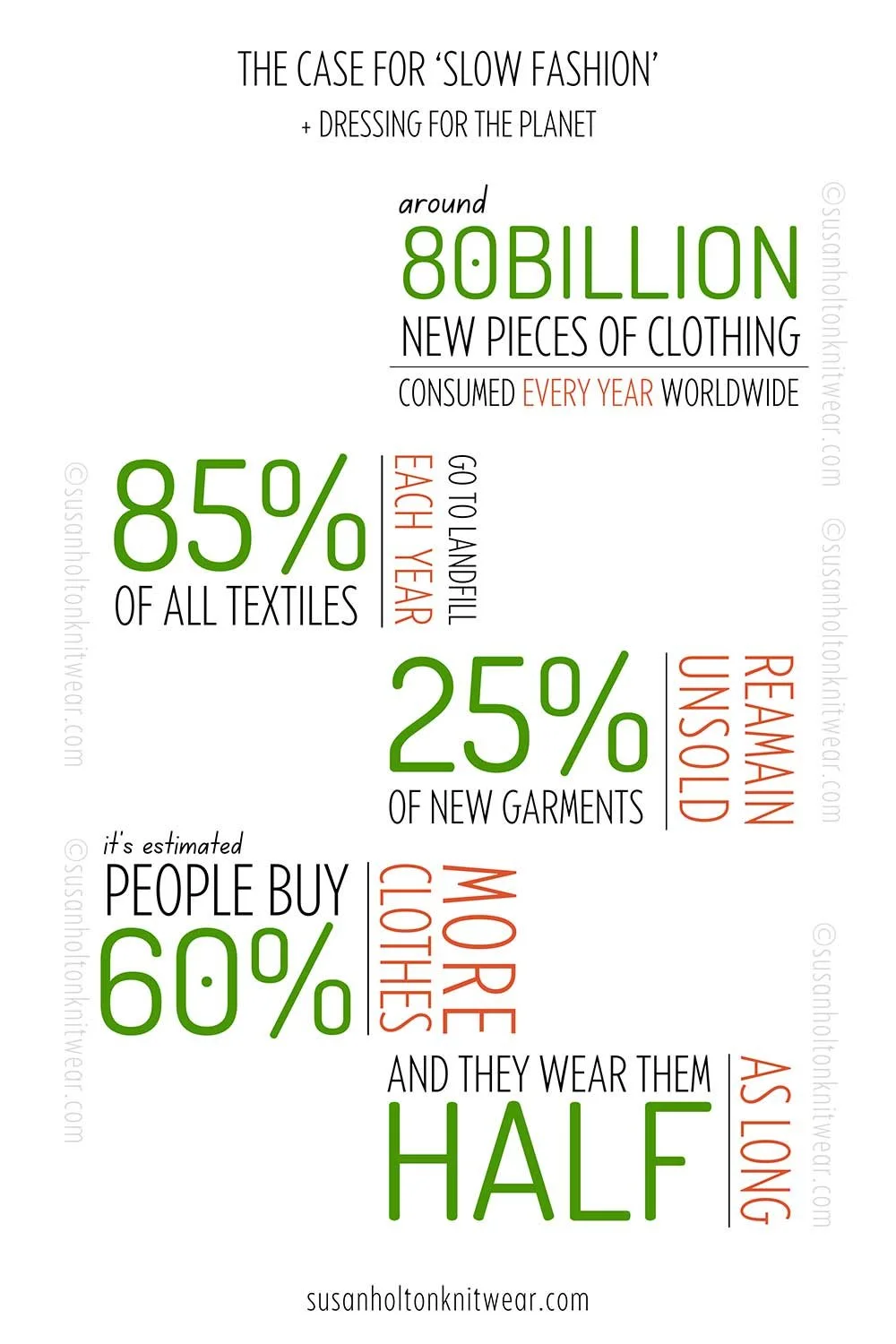
The case for slow fashion
But, what about after you get your lovely new knitwear home and start wearing it?
AFTER YOU BUY
1 Washing and drying your knitwear (or any garment)
Issues: microfibres, detergents, chemicals
Microfibres are tiny fibres which are released into the water when we wash items containing synthetic fibres such as spandex, polyester, nylon and acrylic. Up to 700,000 microfibres might be released for one average (6kg) load of laundry of these fibres – or, over 100 fibres per litre of water. These are big scary numbers, and I haven’t been able to find anything to show me what these quantities actually look like. However, it seems that ‘fleece’ garments are the worst culprits as they are usually 100% polyester and they are thought to release over 170% more microfibres than other synthetic fibres/garments.
Other chemicals which may be released during laundry include detergents, dyes, mordants (helps fix dye to the clothing), and plasticizers (used to soften some fibres).
These all add to the pollution in our rivers and seas, and to the dangers to aquatic and other life.
For those wishing to know more about how to protect from microfibres released when laundering synthetic fibres, I’ve attached information on some potential solutions such as washing machine filters and washing bags to the end of this blog post.
2 Energy consumption
Issues: expense, wear and tear on garments, need to buy sooner, global warming
The energy used when we wash, dry and iron mounts up alarmingly. It probably represents 60-80% of the energy consumption during the lifetime of a garment. And that energy is expensive.
Washing and drying (especially tumble drying) not only uses energy, it also adds to wear and tear so it wears out our clothing faster than needed.
So we end up replacing the items in our wardrobes sooner and buying new with greater frequency. Bad for our bank accounts and bad for the environment!
3 Disposal
Issues: waste, landfill, greenhouse gasses, pollution, cost
It’s thought that the average person (in the first world) discards around 32 kilos of clothing in a year. I find this a terrifying statistic. And, sadly, a large percentage of discarded clothing ends up in landfills. Even some of the clothes we take to the charity shop or to the ‘goodwill’ will end up in landfill.
Globally, around 85% of all textiles are thrown away rather than recycled. And synthetic fibres, which are in over 60% of clothing, can take hundreds of years to decompose.
I’m told that even natural fibres when in landfills will produce methane (greenhouse gas) during decomposition.
NB The statistics throughout this blog post have come from a variety of sources. I’ve listed these as further reading at the end of the post.
“‘There is no such thing as ‘away’ - so - when we throw anything away, it must go somewhere.’”
What can we do after we have bought something?
This is all scary stuff, but we can take action and we can minimise the impact our clothing has during its lifetime. And taking action will also extend the life of your favourite pieces and reduce the cost per wear.
Here are some actions we can all take to improve sustainability and help the environment
Wash items less frequently, wash them carefully and only when actually needed
Use cold or cool water, not hot
Hand wash if you can
Avoid tumble drying
Care for + repair your clothes – don’t discard them until you absolutely have to
Store them carefully
More detail below…
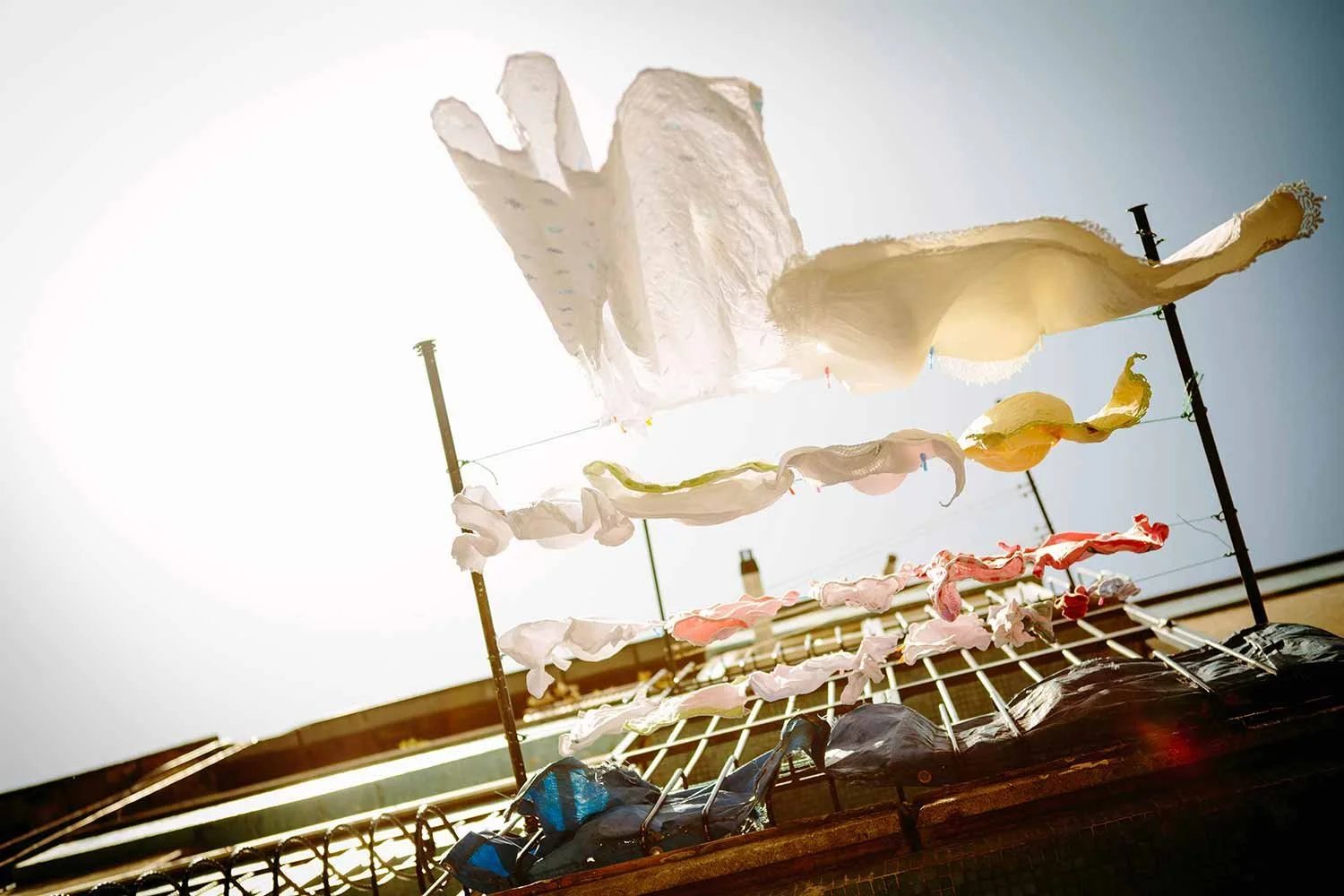
Wash and dry your clothes as naturally and as low tech as possible
“‘Care for your clothes like the good friends they are’”
Basically, keep it natural - and as ‘low tech’ as possible!
Here’s a little more detail:
1 Wash items less frequently, wash them carefully and only when actually needed
Very few items of clothing need to be washed after every wear, airing is usually enough to refresh them. Knitwear especially will generally not be worn next to your skin, so you can wash it less frequently than underwear, or a camisole top, for example. By washing clothing less frequently you reduce your water consumption and help stop the fibres from breaking down too quickly and the garment from wearing 0ut.
2 Use cold or cool water - not hot
If it’s time to wash your knitwear, ideally use tepid or cold water. This reduces energy use and is gentler on the fabric, so it helps to maintain its colour, shape and texture. Use a mild detergent and preferably one that’s biodegradable and free from harsh chemicals.
3 Hand wash if you can
Hand washing is the best method for caring for delicate knits, as it minimizes the stress on the fibers compared to using your washing machine. Don’t use hot water, use only a small amount of detergent, gently squeeze out the water - don’t wring - and rinse well.
4 Avoid tumble drying
Avoid tumble drying, which can shrink and distort your knitwear. Instead, lay knitwear flat on a towel, roll it gently to ‘blot it’ and remove excess water, then gently reshape it, and leave it to air dry. However, most woven garments don’t need to dry flat, they can dry on hangers or on a washing line.
5 Care and repair your clothes – and don’t discard them until you absolutely have to
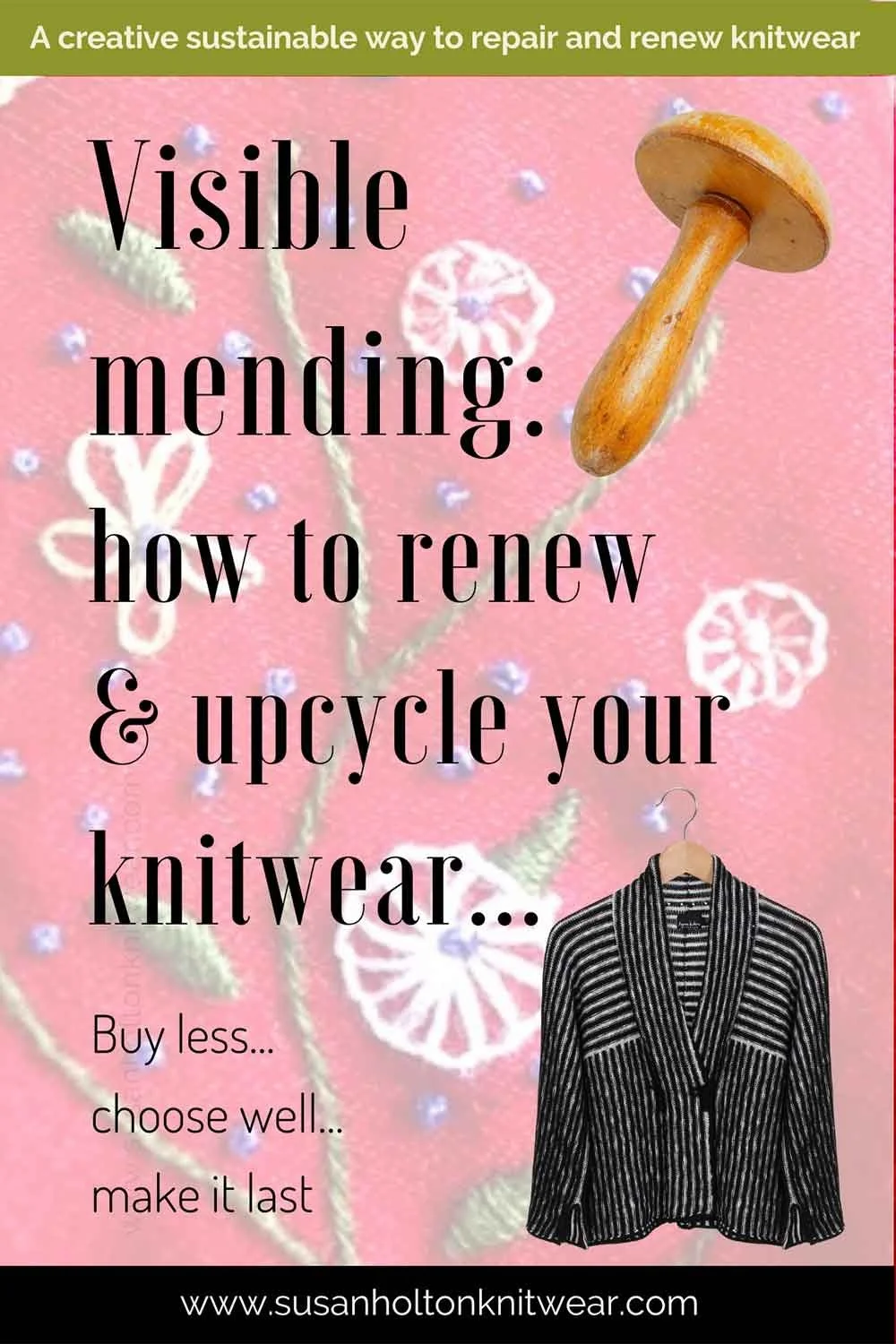
If you look after your favourite knits they will last longer. I’ll be honest, I don’t actually enjoy mending, but I do it when I have to, and if it’s visible mending – I try to make it creative so it’s more enjoyable for me. More on creative mending on my blog post here.
If your favourite pieces are showing signs of wear you can patch or darn holes and re-stitch loose threads. If you need help, there are easy to access online resources to show you how to do this.
If you are trying to repair something you have bought from me and need a matching thread, please get in touch. I’d love to help, if I still have some of the yarn here, I’ll happily send you some to help you to repair your garment.

Well over 10 years ago I bought a swing dress from Susan. Recently I found a small break in the neckline. I contacted Susan asking her if it would be possible for her to let me have some matching thread… three days later some thread arrived in the post. What a service!
6 Store items carefully
It’s best to store knitwear folded rather than hanging to avoid stretching, however, most woven (non-knitted) garments will be happy on a hanger.
If you’re storing clothing for a season, make sure it’s clean and dry before you put it away. Consider using storage bags to protect items from moths and dust. And if you need them, don’t forget to pop in some anti-moth cassettes or cedar chips to keep the moths at bay. You can read more about discouraging moths in my blog post here.

A lovely pile of folded Susan Holton Knitwear
Can we really make a difference?
I think we can - and it actually benefits our bank accounts as well as the environment
The main things we can do are:
choose our clothing well
choose not to buy fast fashion
if needed launder and repair each piece carefully rather than discard
wear our clothes until they wear out
if you decide you don’t want to wear a piece any more - pass it to someone else, give it to a charity shop, sell it online, have a clothing swap - anything you can think of to avoid landfill
By extending the life of your knitwear you will significantly reduce the cost per wear. You will get more value for money from each piece, and you will need to replace your knitwear less often.
And by adopting more sustainable practices in caring for and disposing of our clothes, we can also reduce our overall environmental footprint.

This lovely kimono-style cardigan sweater can be found on my website here
Some sources of information and further reading
The ‘Well Dressed?’ report from the University of Cambridge Institute for Manufacturing
An article in The Guardian newspaper about filters for microplastics
The dark side 0f fast fashion and its environmental impact from earth.org
UN Environment Programme - environmental costs of fast fashion
Two possible solutions to the problems of microfibres
1 Washing machine filters
You can now buy filters which are said to catch up to 90% of the microfibres produced by machine washing. These can be fitted to many washing machines. Please note that this is not a recommendation to buy, just another option to consider.
It’s also a good idea to read this article from the Guardian.
2 Protective washing machine bags
Another option is a washing bag called a ‘Guppyfriend bag’. Especially helpful if you don’t have space to install a washing machine filter. Your polyester or synthetic garments go inside one of these bags before it goes in your washing machine. The bag catches microfibres that may break off during the laundry cycle.
About Susan Holton Knitwear
For those that don’t know me yet, I’m a Surrey UK based knitwear-designer-maker creating luxury contemporary knitwear and accessories for women. This website is the main ‘shop’ for my knitwear, you can browse my shop by clicking the button above.
In addition, I exhibit at a few ‘in person’ events each year at which you can browse and try on (and buy, if you wish) a selection of my beautiful knitwear including cardigans and jackets, sweaters and jumpers, dresses and tunics, scarves, hats, mittens, wrist warmers and more. My knitwear is finely crafted and handmade in natural yarns in my home-studio in Surrey. It is never mass-produced.
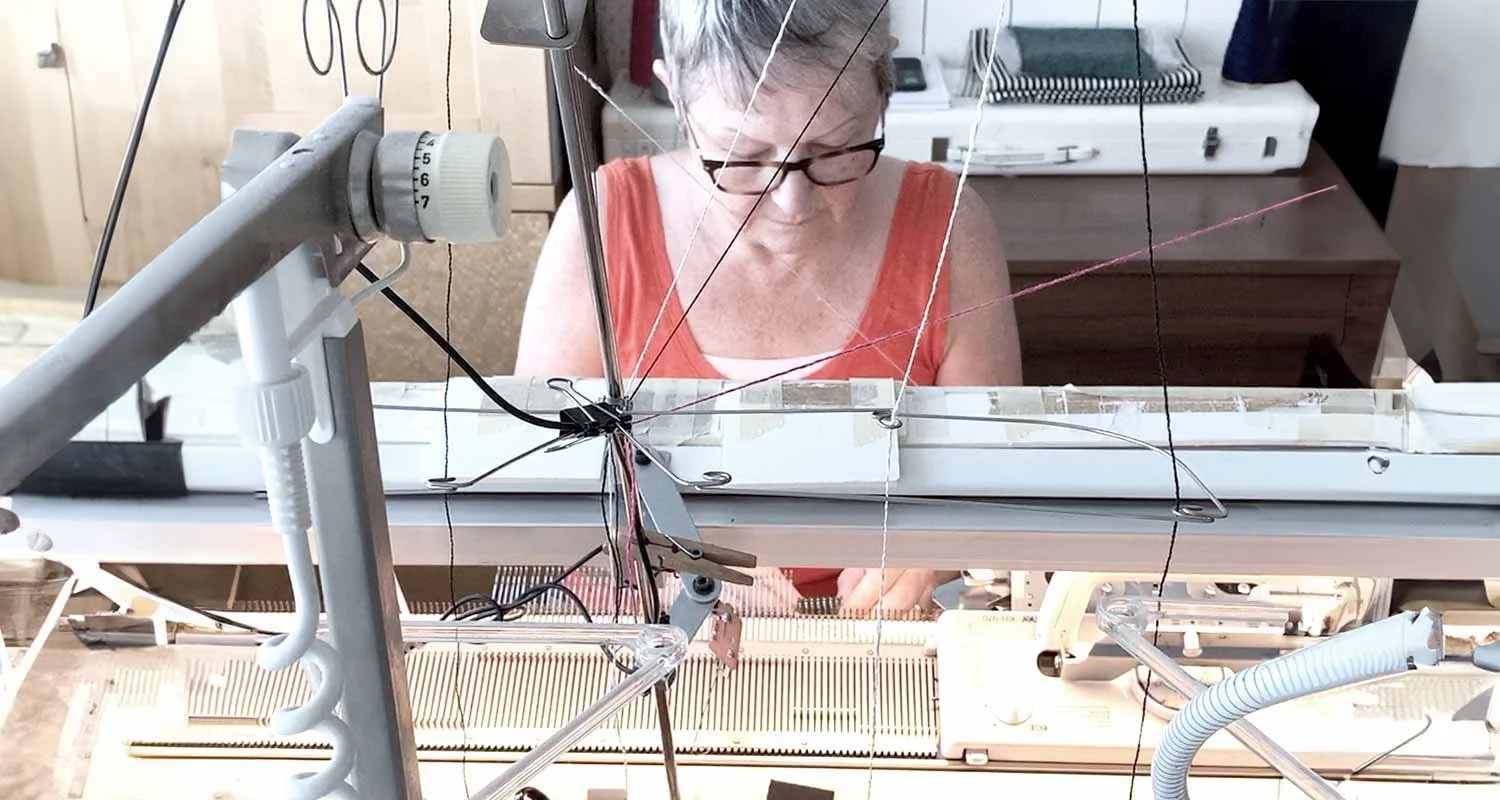
Susan Holton working in her Surrey studio
Personal shopping at my studio
Would you like to shop in person at my home-studio? Please do get in touch if you would like to arrange a visit.
Find out about events, sales and other news by joining my mailing list
If you’d like to be kept in touch with my news, sales, events and offers you may like to join my VIP list. I won’t make a nuisance of myself, I’ll only email you when I actually have something new to say!
The case for slow fashion


Susan Holton working at her knitting machine
Susan Holton creates beautiful wearable knitwear - for women of all ages shapes and sizes who want to look and feel fabulous.
Read more about Susan Holton Knitwear…
You may also like…


If you’d like to see more blog posts… you can browse all blog posts here, or click on a category from the list below:
Moth prevention - seven tips to stop the moths from eating your clothes and get rid of them for good
Clothes moths are with us in ever increasing numbers. So here is what you need to know to stop clothes moth larvae eating your knitted clothes and leaving gaping holes in your favourite luxury knitwear. How to get rid of the moths and how to stop them from coming back www.susanholtonknitwear.com